Case study: Six Years Behind UNICEF Ireland’s Emergency Appeals
Speed is everything in these campaigns, and our partnership with Vroom Digital will enable us to be quick off the mark and respond in real-time.
UNICEF Ireland

A new TV show gets one chance to be noticed. The Big Pet Project, a brand-new family series made by HopSkip Studios for RTÉ Kids, launched on 15 November 2025, straight into the busiest TV weeks of the year and up against the Christmas favourites families already know.
HopSkip brought Vroom in for a short, fixed-fee PR campaign: under €4,000 for the whole six-week run. The plan was simple. One big national launch, then a fresh local story every week. The result was 38 pieces of coverage in six weeks, from Q102 and VIP Magazine to the Belfast Telegraph. If you have an event, a launch or a new service to promote, the same approach works.
New shows have no audience yet. RTÉ’s own press office announces every new series, but that mostly reaches people who already watch RTÉ.
HopSkip wanted the show talked about beyond RTÉ’s own channels: in local papers, on local radio, in the towns where episodes were filmed, and among parents deciding what to watch on a Saturday evening. And like most production companies, they had a set budget. A large paid campaign was not an option, so the campaign had to earn its attention.
Before pitching anything, we planned the whole campaign around the show itself. Six episodes in six places meant six local news stories waiting to be told.
Prep week (3 to 7 November). We finalised the press release with HopSkip, built a target list of national entertainment, family and parenting media and of local outlets in every filming location, gathered photos, quotes and spokespeople, and started pre-pitching.
Launch week (10 to 14 November). We issued the launch release alongside the RTÉ Press Office, agreeing who would pitch which outlets so no journalist got the same story twice, and lined up national coverage and interviews.
Five weeks of local stories (17 November to 19 December). Every week brought a new regional story tied to that Saturday’s episode: three sisters and their pets in Convoy, Co Donegal; a wildlife centre in Loughrea; a Belfast family and their pygmy hedgehog; a Tipperary teenager and his turtle. Local families, local pets, local media.
All the way through. Radio interviews with the presenters and exotic-animal vet Dr Bobby Ortiz, timely story angles, and a coverage update to HopSkip every week, so they could share wins on their own channels as they landed.
Christmas week. A full coverage report, with Vroom’s results shown separately from RTÉ’s own, so HopSkip could see exactly what the campaign added.
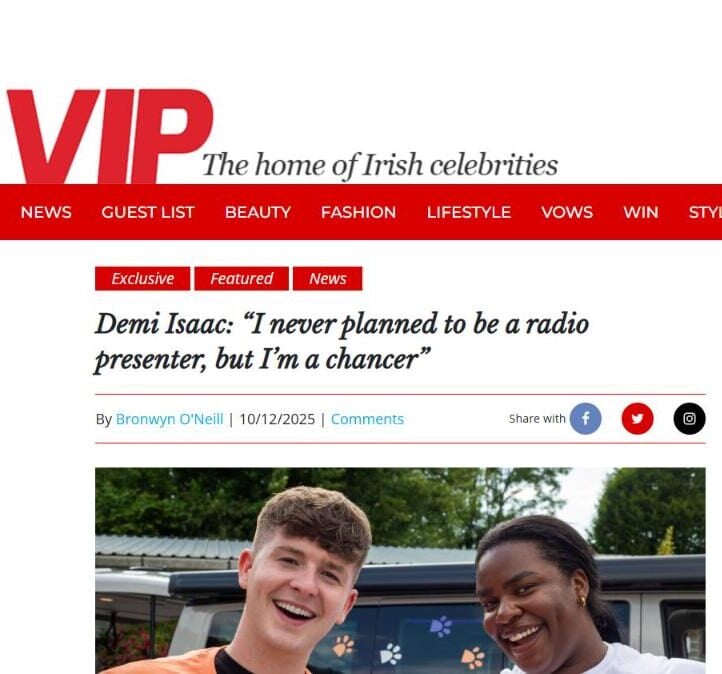
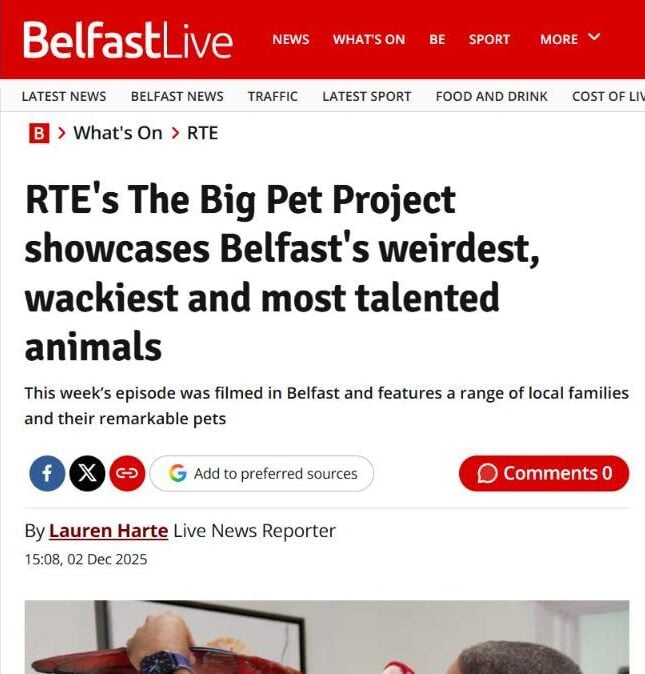
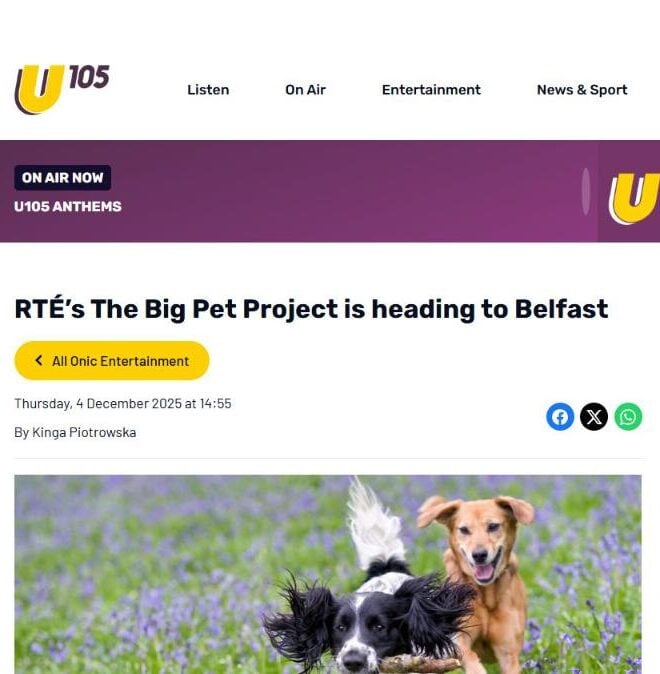
A selection of the coverage, in print, online and on air:
Listen: Highland Radio in Donegal tells listeners to tune in to the Donegal episode.
Across its six-week run, The Big Pet Project was in the news every week of the broadcast, with coverage in every filming location that has its own local media.
Vroom’s share on its own: 19 pieces of coverage beyond RTÉ’s platforms, reaching 1.76 million people and worth €44,055 in advertising value, more than 13 times the campaign fee.
The show has since gone into production on a second series, filming in Laois, Fermanagh, Cork, Limerick, Waterford, Wexford and Meath.
You do not need to be launching a TV show to use this approach. The same planning works for promoting an event, a launch, a new service, a seasonal offer or a new location.
1. Plan before you pitch. Most of the work happens before the press release goes out: the story, the target list, the photos, the spokespeople and the approved quotes. Journalists move fast. If you cannot send a photo the same day, the story goes to someone who can.
2. One announcement is not a campaign. A single press release gets one day of attention. Breaking the story into weekly moments gave journalists a new reason to write about the show every week.
3. Local is your advantage. National media is crowded. Local papers and radio stations want local people and local stories, and they often give them more space. Every location, customer or community you work with is a potential story.
4. Make it about people. The coverage that landed was about real families and their pets, not the show’s announcement. People get coverage. Products and announcements on their own rarely do.
5. Agree who pitches what. We coordinated with the RTÉ Press Office so no journalist was pitched twice. If you work with a supplier, franchisor, venue or partner, agree who contacts which media before you start.
6. Report every week. Weekly coverage updates meant HopSkip could share each piece as it landed, while it was still news.
Since this campaign ran, the way people find things has changed. More and more questions are answered by Google’s AI Overviews, ChatGPT and other AI tools before anyone clicks a link. Optimising for those answers is often called AEO (answer engine optimisation) or GEO (generative engine optimisation), and PR now plays a big part in it.
Coverage on trusted Irish news sites does two jobs. Links and mentions from established publishers build the authority of your website, often measured as Domain Rating, which helps it rank in Google. And AI tools lean on trusted, widely published sources when they decide which businesses to mention and what to say about them. A business that keeps appearing in reputable local and national media is far more likely to be named in an AI answer.
If we ran this campaign today, we would also:
The result is PR that keeps working long after the news cycle moves on: every time someone asks Google or an AI tool for a recommendation in your area.
This was a fixed fee, under €4,000, for the full six weeks. That covered press release writing, media pitching, journalist liaison, interview management, weekly coverage updates and an end-of-campaign report. No retainer and no ongoing commitment.
For an event, a launch or a new service, a fixed-fee PR campaign gives you a clear cost up front and a clear finish date. If you have something coming up and are wondering whether PR is worth it, talk to our PR team in Dublin.
A new show doesn’t need one big announcement. It needs a reason to be in the news every week. We built the PR around the episodes themselves, so every filming location had its own local story, and the coverage kept coming right up to Christmas.
Niamh Waters, Head of PR, Vroom Digital
It depends on how long it runs and how much media you want to reach. A focused launch campaign like this one, with a press release, national and regional pitching, interviews and weekly reporting, ran on a fixed fee under €4,000. Ongoing PR is usually a monthly retainer.
Yes. Events, launches and new services suit a short PR campaign well, because they have a clear date to build towards. We start five to six weeks out with the story, media list and invites, pitch in the run-up, and keep the coverage going while it is on.
Give yourself at least five to six weeks. That time goes on building the media list, sending invites, developing story angles and lining up photos and spokespeople, and journalists get booked up early. Some industries need longer, depending on the type of media you want there: magazines and national features plan weeks or months ahead.
A real news angle, a local or human connection, people journalists can talk to, and good photos ready to send the same day. It also has to go to the right journalist, not a mass mailing list.
Advertising value equivalent is what your coverage would have cost if you had paid for the same space as advertising. It is a useful comparison, not a sales figure, so we report it alongside reach and the quality of the outlets.
Yes. Local media is often the best place to start. Local papers, radio stations and news sites want local stories, and openings, anniversaries, community work, new hires and expansions can all be news.
Digital PR focuses on online coverage and links back to your website, which also helps your SEO and how your business shows up in Google and AI answers. Most campaigns, like this one, mix print, radio and online.
AEO (answer engine optimisation) and GEO (generative engine optimisation) are about getting your business mentioned in AI-generated answers, such as Google’s AI Overviews and ChatGPT. These tools rely heavily on trusted, published sources, so coverage in reputable media is one of the strongest ways to be included.
Speed is everything in these campaigns, and our partnership with Vroom Digital will enable us to be quick off the mark and respond in real-time.
UNICEF Ireland
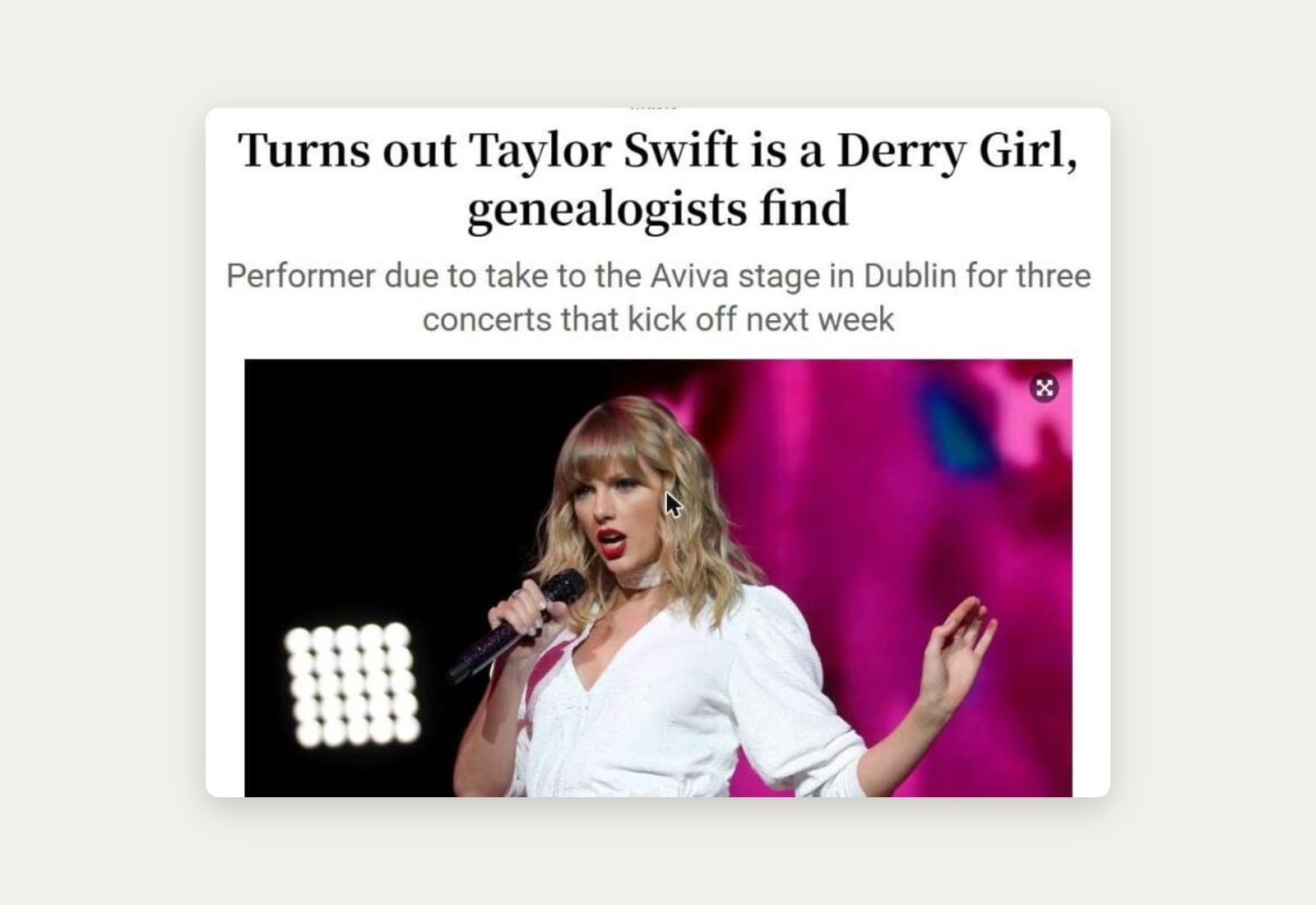
The award-winning PR and paid campaign that uncovered Taylor Swift’s Irish roots and lifted EPIC’s ticket sales 43%.
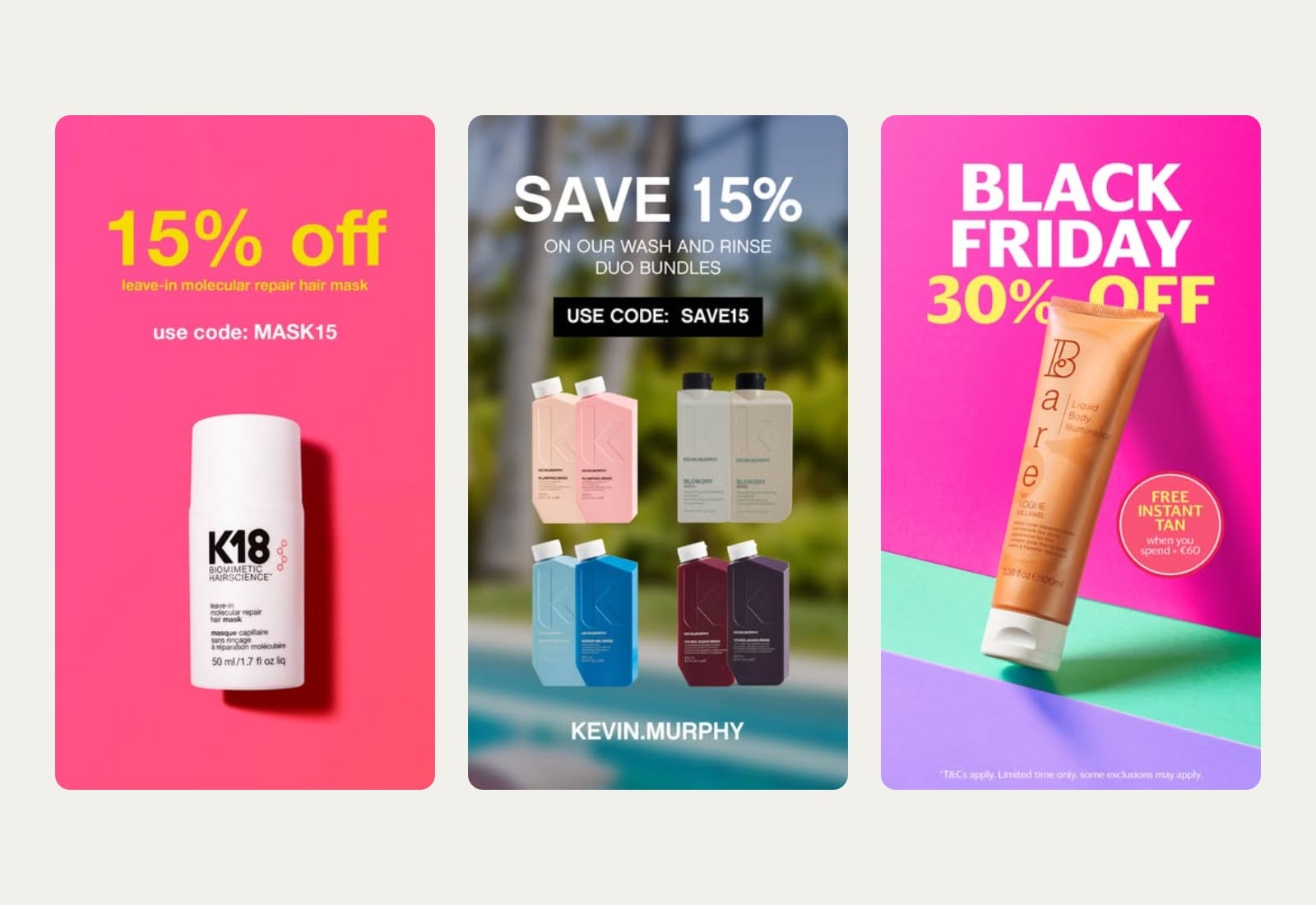
From a Bridgerton moment to TikTok Shop’s Irish launch: how Vroom grows beauty brands like K18, KEVIN.MURPHY and Bare by Vogue across Meta, TikTok and Google.
Even when I couldn’t dedicate as much time as I wanted, the team at Vroom continued to push performance and make smart, positive changes.
Keith Wall, Seiko Ireland
Ten years growing with Ripples Bathrooms, from one showroom and one service to two showrooms and one joined-up team.
We are delighted with the results of the campaign, which is driving significant ROI already, and even more importantly, significant awareness about the risks of flying drones in public. From an engagement perspective, the campaign has also been very beneficial for both us and the consumer, with comments and enquiries up significantly on previous years. Bronagh and the team at VROOM really understood from the off what this campaign was about and delivered across the board for us.
Alec Elliott – Corporate Affairs and PR Manager, Irish Aviation Authority
A Christmas paid social campaign that sent EPIC’s website visits up sevenfold and won at the European Search Awards.
EPIC’s award-winning campaign against Irish stereotypes, from Paddy McFlaherty to Paddy A.I.rishman and Dear Erin.
Vroom are true partners taking the time to really understand how our business works. We always get excellent advice and have grown our business as a result.
Aileesh Carew – CEO and Museum Director
Vroom have managed our Google Ads for over eleven years and they understand the sensitivity of what we do.
Fiona O’Malley, CEO, Turn2me
A fantastic Irish agency, and a key partner for any business who is serious about digital growth. Collaborative ways of working, highly skilled account teams, excellent communication and consistent, robust data reporting are some of the benefits reaped when working with Vroom.
Amy French – Marketing Manager, Sisu Clinics
A special mention to Bronagh, Ben and Luke – truly experts in their fields!.

The team at Vroom exceeded our expectations. They created a fantastic concept centred around nostalgia, which really resonated with us, perfectly captured the heart of our brand, and brought our story to life in a way we couldn’t have imagined. This campaign has given us an incredible platform to celebrate our milestone year.
Áine Faughnan – Managing Director, Dromod

"*" indicates required fields
